Urban Fantasy: Well, Sort Of

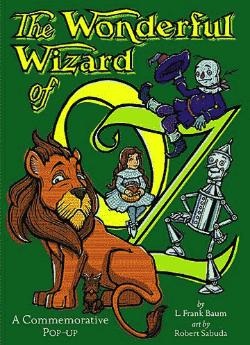
The Wonderful Wizard of Oz

How wonderful were those early books? I loved those illustrations.

Actually, I want to talk about something that shaped American fantasy as we know as well as a series that I encountered early and have loved ever since and that’s L. Frank Baum’s Oz.

I’ve been reading Oz and Beyond: The Fantasy World of L. Frank Baum, by Michael D. Riley, which is about Baum’s life and the worlds that he created. It’s a folklore that feels very American, and yet it’s a mythology that few have drawn on: John Kessel’s The Baum Plan for Financial Independence and Tad Williams’s Otherland (which has some delightfully demented riffs on Oz) are two that occur to me. I’d love to see more using it for sure. A recent anthology, Shadows of the Emerald City, holds short stories influenced by Oz. (I was delighted to find it for $2.99 on the Kindle and am looking forward to reading it.) (Later edit: Let me add Tom Doyle’s well-done story, “The Wizard of Macatawa,” to the list of Oz-inspired works.)


At the same time, it’s part of Baum’s theory of fantasy that can be used to lead the discussion back in the direction of urban fantasy (beside the alternate direction where I go on about how much I’d like to see urban fantasy that draws on Oz and what forms that might take). Baum posited six kinds of fantasy:

  1. Stories that deal with marvelous machines and inventions of the future.
  2. Stories that take place completely in the imaginary world without the appearance of any character from our own world.
  3. Stories that explain origins (like Baum’s story about Santa Claus)
  4. The adventures of American characters “in the Perilous Realm or upon its shadowy marches”
  5. The adventures of fairies in our own world
  6. The animal fairy story

Urban fantasy falls into that fifth catagory, with “fairies” standing in for a multitude of supernatural creatures (I just picked up a Judith Fennell one with a male mermaid). Sometimes the protagonist is human – maybe fifty-fifty, maybe a little more in one direction or the other – but supernatural creatures are always there, in one form or another.

Does that seem like a fair thing to nail into a definition of urban fantasy?

Facebook Twitter Email

Related Posts:

About Cat

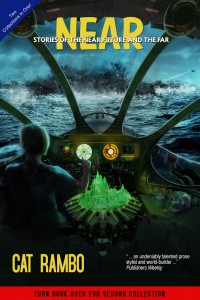
Cat Rambo lives, writes, and teaches by the shores of an eagle-haunted lake in the Pacific Northwest. Her 100+ fiction publications include stories in Asimov's, Clarkesworld Magazine, and Tor.com. Her short story, "Five Ways to Fall in Love on Planet Porcelain," from her story collection Near + Far (Hydra House Books), was a 2012 Nebula nominee. Her editorship of Fantasy Magazine earned her a World Fantasy Award nomination in 2012.
This entry was posted in Writing and tagged , , , , . Bookmark the permalink.

4 Responses to Urban Fantasy: Well, Sort Of

  1. That really hits he nail on the head, although it’s really the term “urban fantasy” that I disagree with. However, I have no suitable alternative, so I go with it.

  2. Cat, that’s a great question. I’ve been reading quite a lot of urban fantasy and there’s a tremendous variety of style, structures and even primary themes, but ultimately, it’s about “fairies living in our own world”, if you use the term “fairies” as a metaphor for any kind of mythic being. So, yeah, it definitely seems reasonable to tack that into the definition.

    I just read Walter Jon Williams’ excellent This is Not a Game, and thought that it, too, was a kind of urban fantasy. Instead of fairies, he gave us pitch-perfect Platonic geeks and hackers, trolls and other dwellers online – all starting to live and interact in “our own world”.

    Thanks for the tip about the Kindle book. Instant gratification!!

    Cheers

    -Jeffle

  3. Tom Doyle says:

    Thank you for the mention!

Leave a Reply

Your email address will not be published. Required fields are marked *

*

You may use these HTML tags and attributes: <a href="" title=""> <abbr title=""> <acronym title=""> <b> <blockquote cite=""> <cite> <code> <del datetime=""> <em> <i> <q cite=""> <strike> <strong>